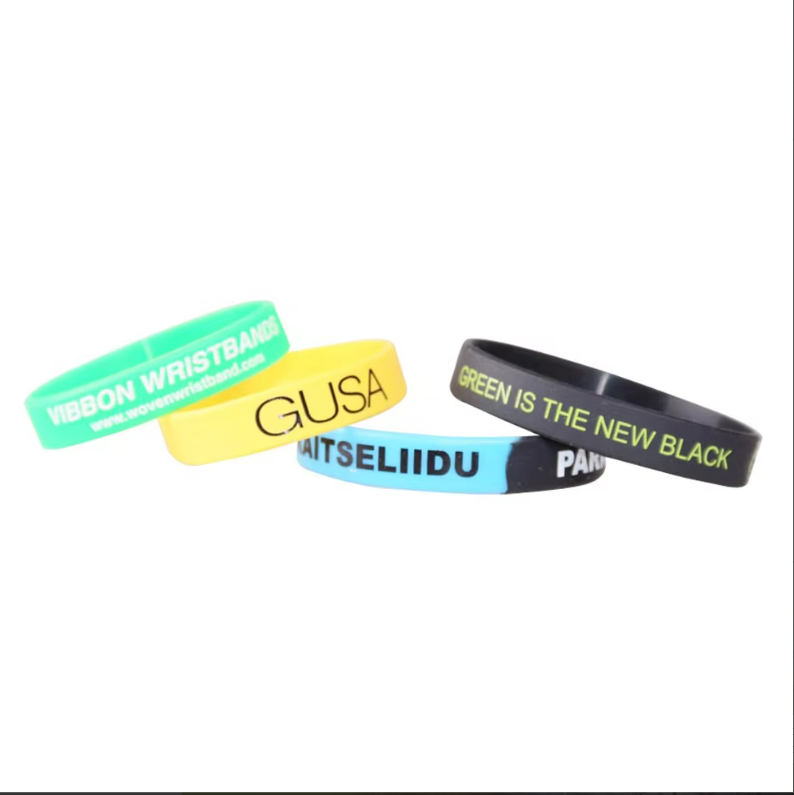
From wristband to workhorse in two decades
Silicone bracelets first entered public consciousness through a single, highly visible campaign: a yellow band worn by a professional cyclist fighting cancer. That moment cemented the silicone bracelet as a symbol of personal commitment. What began as a narrow use case has since expanded into a surprisingly wide range of practical applications, many of which fly under the radar precisely because the product does its job so quietly.
Today, a silicone bracelet might identify a VIP guest at a resort pool, track a patient's fall risk in a hospital corridor, or serve as a digital key to a hotel room. The material properties that made it suitable for a charity campaign, softness, durability, hypoallergenic surface, and low cost, turned out to be equally valuable for identification, access control, and safety tagging. The bracelet that started as a statement piece is now a functional component of operational workflows across industries that have nothing to do with wrist fashion.
Material properties that open up serious applications
The practical value of silicone bracelets rests on a set of material characteristics that other wristband materials struggle to match all at once. Silicone is hydrophobic, which means it does not absorb water, sweat, or sunscreen. That alone makes it the default choice for aquatic environments and multi-day outdoor events where woven or fabric bands would become damp, heavy, and a breeding ground for skin irritation.
The material also handles a wide temperature range without significant dimensional change or embrittlement. A bracelet worn in a hot tub at one end of a resort and a refrigerated indoor exhibit at the other functions identically. From a chemical standpoint, cured silicone resists degradation from chlorine, saltwater, alcohol-based hand sanitizers, and most cosmetic lotions, substances that attack polyester weaves and dull plastic finishes over repeated exposure. For hospital use, the non-porous surface denies bacteria the microscopic crevices they need to colonize, a property that aligns with infection control protocols without requiring special handling by the wearer.
Identification and access control without the friction
The most common practical use for silicone bracelets sits at the intersection of identification and access control. Resorts, water parks, cruise ships, and multi-day festivals all share a problem: they need to verify guest credentials repeatedly across multiple checkpoints, often in wet or crowded conditions where pulling out a phone or a wallet is inconvenient or risky.
A silicone bracelet solves this by staying on the wrist for the entire duration of the stay or event. It does not need to be retrieved from a pocket or bag. It does not get left on a sun lounger. When embedded with an RFID or NFC chip, the bracelet adds a layer of functionality beyond visual identification. It becomes a room key, a payment token, and an access pass for gated areas, all in a single wearable item. The guest experience smooths out. Queues move faster. Staff spend less time checking credentials manually and more time handling exceptions.
A hospital deployment that changed the wristband specification
A mid-sized hospital group ran a pilot program to improve patient identification accuracy and reduce wristband-related skin reactions. Their existing stock of plastic wristbands had two persistent issues. The edges chafed patients with fragile skin, particularly elderly and long-stay patients. And the printed patient data, applied via adhesive label, smudged or peeled after a few days of bed baths and hand-sanitizer exposure.
The hospital switched one ward to debossed silicone bracelets with the patient ID molded directly into the material. The debossing eliminated the label entirely, so the identifier could not smudge, peel, or fade under alcohol exposure. The softer material reduced skin irritation complaints by a measurable margin within the first month. Pharmacy staff scanning barcodes during medication rounds reported fewer scan failures because the barcode, also debossed and color-contrasted, stayed crisp and flat rather than crinkling as adhesive labels did. The pilot expanded to three more wards, and the procurement team adjusted the specification to prioritize debossed silicone for any patient population with extended average stays.
|
Wristband Type |
Skin Irritation Complaints (per 100 patients) |
Barcode Scan Failure Rate |
Identifier Durability (days) |
|
Plastic with adhesive label |
12 |
4.5% |
3 to 5 |
|
Woven fabric with printed label |
6 |
2.8% |
5 to 7 |
|
Debossed silicone |
2 |
0.6% |
14+ (ward stay duration) |
Source: Internal pilot program data from a hospital group. Patient population included general medical and post-surgical wards. Values normalized for comparison across wristband types with equivalent patient volumes.
Event operations lean on color-coded visual logic
At large events, silicone bracelets often serve a purely visual function that is deceptively simple. Color coding allows staff to read access levels, age verification status, or session permissions from a distance and in poor lighting. A green bracelet means general admission. A red one signals over-21 access at the bar. A blue one permits entry to the VIP lounge. The system runs on instant recognition rather than close inspection.
This visual logic works because silicone holds color with unusual depth and stability. Pigment mixed into the material before molding saturates the entire cross-section, not just the surface. A bracelet that scrapes against a railing or gets exposed to hours of direct sun still reads as its assigned color. Faded or scratched-off color, a common failure mode for printed or dyed fabric bands, does not happen with pigmented silicone. For event staff working twelve-hour shifts under festival lighting, that color reliability removes one source of cognitive load and speeds up decision-making at checkpoints.
Fundraising and awareness campaigns that keep working for months
Charity and awareness campaigns were the original mass-market use for silicone bracelets, and they remain a significant application for reasons that have little to do with fashion. A well-made silicone bracelet stays on the wrist for weeks or months after the initial event, extending the visibility of a message or a cause well beyond the day of purchase. That longevity is the mechanism that turns a dollar donation into an ongoing conversation starter.
The debossing and color-fill techniques used for silicone bracelets produce text and logos that survive daily wear, showers, and handwashing without degrading. A campaign message that would wash off a temporary tattoo or fray on a fabric ribbon stays legible. From a production standpoint, the mold-based manufacturing process scales efficiently. Once the mold is cut, per-unit costs drop low enough to make large-quantity giveaways feasible, a factor that matters when a nonprofit orders fifty thousand bracelets for a nationwide walkathon.
Durability has a flip side worth acknowledging
The same properties that make silicone bracelets durable also create a disposal challenge. Cured silicone does not biodegrade under normal environmental conditions. It sits in a landfill for a very long time unless it enters a specialized recycling stream. Some manufacturers now offer recycling take-back programs or use silicone that incorporates a percentage of post-industrial regrind, though the availability of these options varies by region and order volume.
For procurement teams, this introduces a calculus beyond unit cost and durability. A single-use silicone bracelet for a one-day event may not be the right environmental choice if a compostable alternative exists for that specific use case. For multi-day or multi-week deployments where no alternative material survives the conditions, the longevity of silicone reduces the number of replacements and the total material consumed over the deployment period. The practical answer is not that silicone bracelets are universally the right choice. It is that they are the right choice when the use case demands a combination of waterproofing, chemical resistance, comfort, and long-wear durability that other materials cannot deliver simultaneously.
Vibbon operates with close to eighteen years of manufacturing history across a product range that includes silicone wristbands alongside woven, sublimation-printed, satin, and plastic constructions. That breadth of production capability allows the team to match the material to the actual deployment scenario, whether the priority is patient comfort in a hospital, color reliability at a festival gate, or waterproof durability at a resort pool. For buyers navigating the trade-offs between materials, use cases, and order volumes, having a supplier that produces across categories rather than pushing a single option makes the specification conversation more productive.
Table of Contents
- From wristband to workhorse in two decades
- Material properties that open up serious applications
- Identification and access control without the friction
- A hospital deployment that changed the wristband specification
- Event operations lean on color-coded visual logic
- Fundraising and awareness campaigns that keep working for months
- Durability has a flip side worth acknowledging