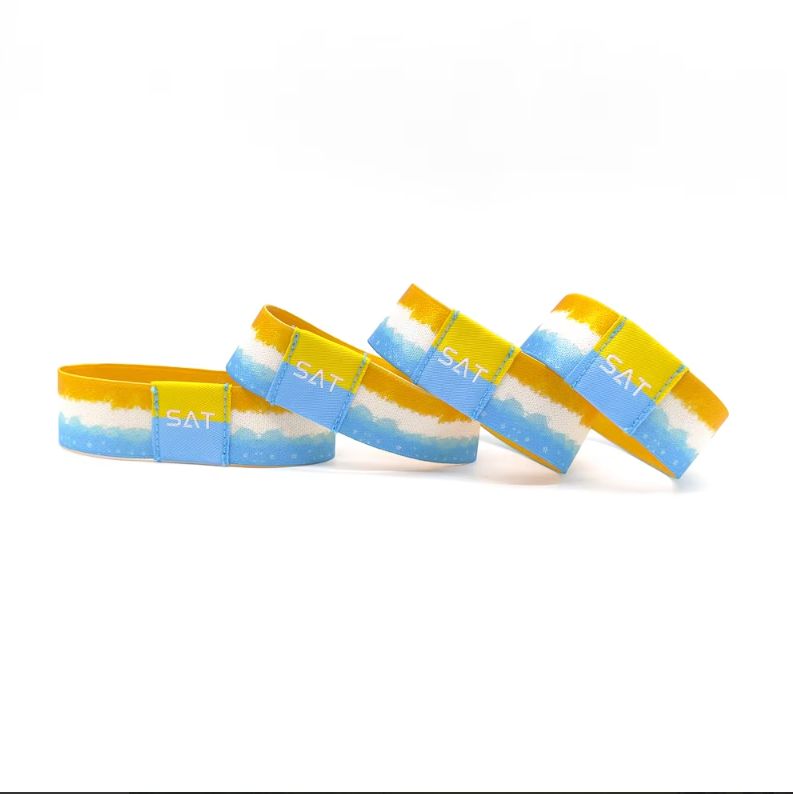
The moment moisture kills a credential
A guest walks out of the pool, shakes water off both hands, and presses a wristband against the reader at the poolside bar. Nothing happens. The bartender waits. The guest tries again, this time wiping the band on a towel first. Still nothing. Behind them, three more guests shuffle impatiently. The wristband, perfectly functional when dry, has absorbed enough water to detune its antenna or short its chip connections. The read fails, and the transaction that should have taken half a second turns into a thirty-second exercise in shared frustration.
This scene replays at water parks, beach clubs, resort pools, and triathlon finish lines. It also replays in subtler forms. A music festival attendee wears a wristband through three days of sweat and two unexpected rain showers. By day three, the embedded RFID inlay has corroded just enough to push the read range below what the entry gate reader can capture. The credential still looks fine. It just does not scan. Waterproof RFID wristbands exist to make that scenario someone else's problem, not the venue operator's.
What waterproof actually means for an RFID wristband
Waterproof is not a binary property. It is a specification with gradations, and those gradations matter for different use cases. A wristband labeled IP67 can survive immersion in one meter of water for thirty minutes. That covers a swim session or a heavy downpour. IP68 pushes the depth rating further, often to several meters for extended periods, which matters for water parks with deep plunge pools or for triathlons where athletes spend over an hour in open water.
The protection mechanism matters as much as the rating. Some wristbands achieve water resistance by sealing the RFID inlay inside a fully molded silicone or plastic housing. The chip and antenna sit encased in a monolithic block of material, with no seams, joints, or entry points for moisture. Others use ultrasonic welding to fuse two halves of a plastic shell around the electronics, which works well but introduces a seam that can fail if the welding parameters drift during production. Woven or fabric wristbands with waterproof inlays add a laminated barrier layer between the fabric and the RFID component, though repeated flexing can eventually create microscopic cracks in the lamination. The manufacturing method directly shapes the durability story.
Silicone as a material advantage for wet environments
Silicone wristbands dominate the waterproof RFID category for several practical reasons that go beyond simple water resistance. The material is hydrophobic at a molecular level. Water beads and rolls off rather than wetting the surface, which means the wristband itself does not become a damp, skin-irritating mess after hours of wear in wet conditions. It also resists the chemical degradation that chlorine, saltwater, and sunscreen inflict on woven polyester or satin bands.
From a scanning perspective, silicone offers a stable dielectric environment for the embedded antenna. Unlike fabric bands that change their moisture content and therefore their electrical properties throughout the day, a silicone band presents a consistent dielectric constant to the RFID inlay. That consistency keeps the antenna's resonant frequency stable, which in turn keeps the read range predictable from morning to evening. For venue operators, that means the gate reader that worked during the ten o'clock entry rush still works during the four o'clock re-entry wave.
A real deployment story: when a resort learned the difference between splash-proof and submersible
A beachfront resort in Southeast Asia upgraded its guest wristbands to an RFID system for room access, cashless payments, and beach area zoning. The procurement team specified water-resistant wristbands, and the supplier delivered bands with a laminated fabric construction rated for light splashing. The first month went smoothly because the weather held dry. Then monsoon season arrived.
Within two weeks, the front desk logged over sixty reports of wristband read failures. The maintenance team collected the failed bands and found a consistent pattern. Water had wicked along the fabric edge, penetrated the lamination seam at the band's perimeter, and reached the RFID inlay. The antenna traces showed visible corrosion under magnification. The resort replaced the entire batch with fully molded silicone wristbands carrying the same chip and antenna specification. Over the following three months, failure reports dropped to single digits, all traceable to physical damage rather than moisture ingress. The replacement cost stung in the short term. The operational lesson reshaped the procurement checklist permanently.
|
Wristband Construction |
Water Exposure Rating |
Failure Rate (3-month tropical use) |
Primary Failure Mode |
|
Laminated fabric, splash-resistant |
Light splashing |
8.2% |
Edge wicking, antenna corrosion |
|
Molded silicone, fully sealed |
Continuous immersion |
0.3% |
Physical damage (cuts, tears) |
|
Ultrasonically welded plastic shell |
Submersion |
1.1% |
Weld seam failure after flexing |
Source: Field data from a single resort deployment. Failure defined as inability to complete a read transaction after drying the wristband surface. Sample size normalized across construction types for comparison.
The chemical environment is often harsher than the water itself
Water alone tests a wristband. Water mixed with what resort guests and athletes put on their skin tests it harder. Chlorine attacks the plasticizers in PVC and can embrittle flexible polymers over repeated exposure cycles. Saltwater leaves conductive residue that, when dried, can form a partially conductive bridge across antenna traces and shift the impedance. Sunscreen, particularly spray formulations with alcohol carriers, can craze certain plastics and soften adhesives used in laminated constructions.
A waterproof wristband that survives a month of pool use might still fail at the beach because the combination of salt, sand abrasion, and UV exposure works on different degradation mechanisms. Sand gets into closure mechanisms and wears down snap posts and locking pins. UV breaks down polymer chains in materials not stabilized for outdoor exposure, turning a flexible band stiff and brittle. The wristbands that last through a full season at a water park or resort pool are the ones designed with the full chemical and mechanical environment in mind, not just the presence of water.
Closure design determines whether the waterproofing matters at all
A perfectly sealed wristband housing means nothing if the closure fails and the band falls off in the wave pool. Waterproof RFID wristbands typically use one of several closure types, each with trade-offs. A snap-post closure with a locking bead offers a secure, single-use attachment that cannot be removed without cutting the band. It works well for multi-day events but leaves no room for adjustment after fastening. A slide-lock closure allows some adjustability but introduces a mechanical joint that can loosen under repeated impact, think body surfing or diving.
For applications where the wristband must stay on through aggressive water activity, a molded-in-place closure that fuses the band into a continuous loop during manufacturing eliminates the failure point entirely. The guest steps into it like a bangle and wears it loose enough to rotate on the wrist. The trade-off is sizing. Continuous-loop bands require either multiple size SKUs or an elastic material that accommodates a range of wrist sizes. Getting the closure right is not a secondary detail. It is the difference between a waterproof wristband that survives the activity and one that sits at the bottom of the pool.
Where waterproofing hits practical limits
No wristband is indefinitely waterproof. Mechanical wear, repeated flexing, and exposure to chemical cocktails eventually degrade any seal. A wristband worn continuously for a month in a resort environment will show signs of material fatigue even if the electronics remain functional. The closure might loosen, the silicone surface might develop micro-tears, or the printed graphic might fade under UV and chlorine exposure.
Setting realistic expectations matters for procurement planning. A waterproof RFID wristband designed for a week-long resort stay uses different materials and construction than one designed for a single-day water park visit. The per-unit cost reflects those differences. Ordering the week-long band for a one-day event overspends. Ordering the day-band for a week-long stay generates failure rates that erode the return on investment. The smart procurement question is not "is it waterproof" but "how waterproof, for how long, under what conditions."
Vibbon brings manufacturing experience across silicone, plastic, and woven wristband categories, which means the production team can match the waterproofing method to the actual deployment conditions rather than offering a single construction as a universal answer. For resort operators, event organizers, and venue managers who need wristbands that scan reliably whether the guest is poolside, rain-soaked, or sunscreened, having a supplier base that understands the difference between splash resistance and sustained immersion shortens the distance between a specification document and a credential that actually survives the event.
Table of Contents
- The moment moisture kills a credential
- What waterproof actually means for an RFID wristband
- Silicone as a material advantage for wet environments
- A real deployment story: when a resort learned the difference between splash-proof and submersible
- The chemical environment is often harsher than the water itself
- Closure design determines whether the waterproofing matters at all
- Where waterproofing hits practical limits