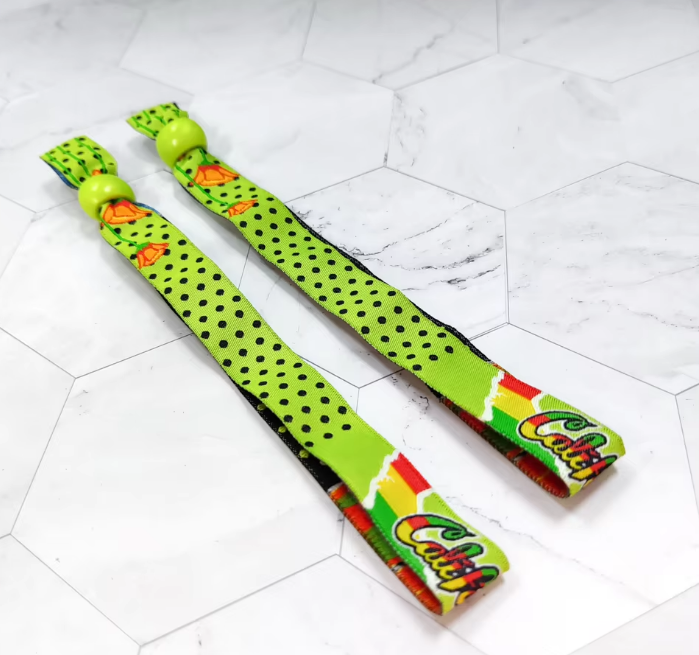
Why a flimsy paper ticket fails at a muddy gate
A music festival is not a normal ticketed event. Rain turns paper into pulp, sweat smears ink, and a crowd at 11 p.m. does not care about barcode orientation. Paper tickets and loose paper passes create three predictable problems: slow entry, easy duplication, and zero useful data after the gate. When 20,000 people arrive in a few hours, every extra second at the scanner becomes a queue, and every queue becomes a safety issue. The Purple Guide, published by the Events Industry Forum, treats ticket and access control as a core part of crowd safety planning, not a box office chore. Festival wristbands solve the physical problem first. They stay on the wrist, survive rain, mud, sweat, and repeated movement, and give staff a fast visual check before any electronic scan. That single change reduces friction at the exact moment when friction is most expensive.
Access control starts before the first act hits the stage
A wristband is not just a badge. It is a portable credential. Festival wristbands can be printed with unique IDs, color-coded by day, tier, or zone, and paired with RFID or NFC chips for automated checks. The technical logic is simple: a reader sends a radio signal, the chip responds with a unique identifier, and the access system checks that identifier against rules. Contactless communication for many of these chips follows ISO/IEC 14443 or ISO/IEC 15693, depending on read range and use case. The business logic matters just as much. Organizers can separate general admission, VIP, artist, crew, press, and medical zones without relying on a tired volunteer's judgment at 2 a.m. For multi-day events, re-entry becomes a scan instead of a torn stub. For campsites, showers, and after-parties, the same wristband becomes a key. The goal is not to make entry feel like airport security. The goal is to make the right access decision in under a second while keeping the line moving.
Anti-counterfeit features that actually survive a mosh pit
Counterfeiting is an old festival problem with a new price tag. A fake ticket can mean lost revenue, but a fake crew wristband can mean unauthorized access to backstage, production areas, or artist compounds. Visual security features help, including microtext, UV ink, holograms, and serialized numbering. Electronic features raise the bar further. A chip-based festival wristband can carry a cryptographic identifier that is checked against a live database, so a copied visual design will not open a gate. The table below compares common options in practical terms.
|
Feature |
Paper ticket |
Basic Tyvek wristband |
RFID or NFC festival wristband |
|
Counterfeit resistance |
Low, easy to copy |
Medium, visual checks only |
High, unique chip ID |
|
Gate processing |
8 to 12 seconds per person |
4 to 7 seconds per person |
2 to 4 seconds per person |
|
Re-entry |
Often manual or torn |
Staff-dependent |
Automatic with reader logs |
|
Cashless payment |
Not supported |
Not supported |
Supported with linked wallet |
|
Durability in rain and sweat |
Poor |
Good |
Very good with sealed inlay |
|
Data privacy |
Minimal |
Minimal |
Requires GDPR-style controls |
Cashless payments and zone access in one wearable
Festival economics have changed. Attendees expect to tap for drinks, food, merch, and lockers without pulling out a wallet in a packed field. A festival wristband with an embedded chip can connect to a preloaded account, so payment happens at the point of sale with a tap. That reduces cash handling, speeds up bars, and gives organizers a clearer view of spending patterns. The same chip can enforce zone access. A guest with a general admission wristband can tap into the main field, but not the artist lounge. A crew wristband can open production corridors during load-in and stay restricted during show hours. None of this is magic. It depends on reader placement, network reliability, staff training, and a clear backup plan. If the Wi-Fi drops, offline validation rules need to be ready. If a chip fails, a printed serial number and a help desk process need to exist. The wristband is the interface, not the whole system.
The data trail that keeps medical and security teams ahead
A credential can do more than open gates. With consent and proper privacy controls, a festival wristband can link to medical notes, emergency contacts, or allergy alerts. At a 22,000-capacity indie festival in the Pacific Northwest, opening day once used paper tickets and staff-applied basic wristbands. By 6 p.m., one gate had a 40-minute queue, and security pulled 180 counterfeit tickets. The next year, the same event moved to RFID festival wristbands with pre-linked credentials and zone profiles. Gate queues became predictable, re-entry scans were automatic, and medical staff could see consent-based allergy alerts after a scan. That is the operational value: not just faster entry, but a shared source of truth when seconds matter. Privacy rules still apply. GDPR and similar laws require clear notice, data minimization, and a way to delete records after the event. A wristband program without those controls is a liability, not an upgrade.
What makes a festival wristband worth specifying
Not every event needs the same wristband. A one-day community concert may only need durable fabric wristbands with sequential numbering. A multi-stage camping festival with 30,000 attendees may need RFID, cashless payments, zone rules, and integration with an access control platform. The specification should follow the risk profile, not the other way around. Key questions include: How many entry points? How many days? Is re-entry allowed? Are there restricted zones? Will payments be linked? What happens during a network outage? How will lost or damaged wristbands be handled? The answers shape the material, closure type, printing method, chip frequency, and data workflow. A cheap wristband that fails on day one creates a bigger cost than a better specified one. For organizers comparing suppliers, Vibbon has focused on identification wristbands since 2007, with medical and entertainment lines, in-house production, printing, and chip integration experience. The right partner can turn a simple wristband into a reliable access layer for the whole event.
Table of Contents
- Why a flimsy paper ticket fails at a muddy gate
- Access control starts before the first act hits the stage
- Anti-counterfeit features that actually survive a mosh pit
- Cashless payments and zone access in one wearable
- The data trail that keeps medical and security teams ahead
- What makes a festival wristband worth specifying