The Hidden Costs of Single-Use Wristbands
Every event organizer knows the drill: order a few thousand disposable wristbands, hand them out at the gate, and watch them end up in trash bins by the end of the night. The upfront price per unit looks tiny, often a few cents. But that number hides the real cost. Single-use event wristbands create a steady stream of waste that venues have to manage, haul away, and pay to dispose of. In many cities, waste diversion requirements now push event permits to include detailed recycling or composting plans. Disposable plastic wristbands rarely fit into either category because they are often mixed materials, a thin plastic strip with an adhesive or a metal clasp. That combination makes recycling difficult and expensive.
There is also the attendee experience. A flimsy wristband that tears before the headliner takes the stage creates a bad look. Replacing it means more staff time, more queue friction, and a higher chance of counterfeit entry. Reusable event wristbands solve several of these problems at once, but they are not a blanket solution. The decision depends on event length, crowd behavior, and the operational capacity to collect and clean them.
Material Choices That Actually Hold Up
Not all reusable wristbands are built the same. The most common options are woven fabric, silicone, and vinyl. Each has a different feel, durability profile, and closure system.
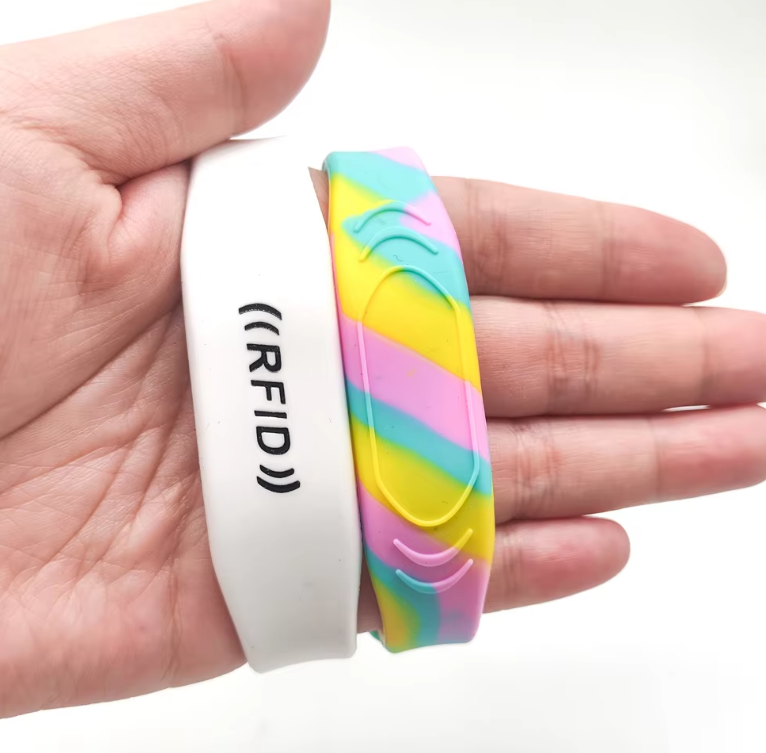
Woven fabric wristbands typically use a polyester or nylon weave with a metal or plastic clasp. They are soft, printable with detailed logos, and comfortable for multi-day wear. Silicone wristbands stretch well and resist water, which makes them a favorite for pool parties and outdoor festivals. Vinyl wristbands offer a middle ground: they are easy to wipe clean and can be produced in bright colors, but they tend to stiffen over time.
The closure matters as much as the material. A one-time snap closure can be removed only by cutting, which is fine for security but bad for reuse. A sliding bead or a reusable clasp allows the band to be taken off and put back on without damage. For events that run multiple days, that difference is huge. A reusable clasp can cut replacement rates dramatically, especially when attendees want to keep the band as a souvenir.
When Reusables Make Operational Sense
Reusable event wristbands tend to pay off under a few conditions. First, the event lasts more than one day, or it is part of a series where the same audience returns. Second, the venue has a controlled entry and exit process, so collection points can be staffed. Third, the organizer already has a cleaning or sanitizing workflow for other reusable items, such as cups or lanyards.
On the flip side, a single-day fun run with ten thousand participants who scatter across a city park may not be the best fit. The labor to collect bands from every corner of the park can outweigh the material savings. Similarly, events with high turnover and no exit scanning may see low return rates. The honest answer is that reusables work best when the logistics support them. A clear collection plan, a simple incentive like a small deposit or a prize draw, and a designated cleaning partner can turn a good idea into a reliable system.
The Data Behind Reusables vs. Disposables
The environmental case is not just about landfill volume. It is about the total lifecycle impact, including water use, energy, and transportation. A 2021 study from the University of Edinburgh found that reusable event wristbands made from woven fabric had a lower carbon footprint than disposable plastic bands after just three uses. After ten uses, the gap widened significantly.
|
Factor |
Disposable plastic wristband |
Reusable woven wristband |
|
Typical cost per unit |
$0.05 to $0.15 |
$0.60 to $1.80 |
|
Average uses |
1 |
15 to 30 |
|
Waste per 10,000 attendees |
10,000 units |
400 to 700 units |
|
Recycling compatibility |
Low |
Moderate to high |
|
Staff time for replacement |
High |
Low |
The table shows why the unit price can be misleading. A reusable band that costs a dollar and survives twenty events delivers a much lower cost per use. The catch is that the band has to actually come back. Without a collection system, the reusable option becomes an expensive disposable.
Real-World Lessons from a Festival Deployment
A three-day electronic music festival in the Pacific Northwest switched from disposable vinyl to reusable woven wristbands with a sliding bead closure. The first year was rough. Collection bins were placed only at the main exit, and many attendees left through side gates. The return rate was around 62 percent, which meant the organizer still had to buy a significant number of replacements for the next edition.
The second year, the team added collection points at every exit, trained volunteers to remind attendees, and offered a free drink voucher for returned bands. The return rate climbed to 89 percent. More importantly, the queue at the replacement desk dropped by half. The festival’s operations director noted that the biggest surprise was not the waste reduction but the speed of entry. Reusable bands with a consistent clasp were faster to scan and adjust than the old adhesive strips.
That experience matches broader industry findings. According to the Event Industry Council’s 2022 sustainability report, 68 percent of surveyed organizers who adopted reusable credentials reported fewer entry disputes and lower replacement costs after the first year. The same report noted that the biggest barrier was not cost but staff training and attendee communication.
What to Look for in a Reusable Wristband Supplier
Sourcing reusable event wristbands is not just about picking a color and a logo. The supplier should be able to explain the closure mechanism, the material composition, and the cleaning instructions. A band that cannot survive industrial laundering will not last more than a few events. Ask for samples and run a small pilot before committing to a full order.
Quality control matters more than most organizers expect. A batch with inconsistent clasp tension can cause entry delays or accidental releases. A supplier with in-house production and a documented inspection process reduces that risk. For teams sourcing at scale, working with a manufacturer like Vibbon, which has been producing identification wristbands since 2007, can simplify material selection and quality control. Vibbon’s experience with both medical and entertainment wristbands means the production team understands the difference between a band that needs to stay on a patient’s wrist for days and one that needs to survive a mosh pit. That kind of practical knowledge is hard to fake.
Reusable wristbands are not a magic fix. They require planning, staffing, and a willingness to iterate. But for events that run multiple days or repeat throughout the year, they offer a way to cut waste, speed up entry, and give attendees something worth keeping. The upfront cost is higher, and the logistics are more complex. The payoff, when the system is built correctly, is a smoother operation and a smaller footprint.